Technology
Building on Data, Algorithms, and AI Models
Our technology direction connects disciplined model development, data intelligence, intelligent systems, and practical integration while clearly distinguishing current capabilities from longer-term exploration.
A Practical Technology Foundation
Quantgroup approaches AI as a connected technical foundation rather than a collection of isolated features. Data quality, model behavior, system design, human oversight, and operating constraints all influence whether an intelligent capability can create useful value. Our work begins by understanding the environment in which a system may operate: the people involved, the decisions it supports, the information it can legitimately use, and the consequences of error. This perspective helps frame technical ambition within real requirements and prevents an early prototype from being mistaken for a production-ready system.
AI Models and Algorithms
Our model direction includes the study and application of foundational and vertical AI models, supported by algorithms appropriate to a defined task. A model may assist with classification, retrieval, generation, forecasting, prioritization, or interaction, but selection depends on evidence rather than fashion. We consider input quality, evaluation methods, latency, cost, interpretability, safety, and maintenance before recommending an approach. Some model capabilities described here remain under development or exploration. Their presence on this page communicates research direction and technical interest, not a promise that every capability is commercially available.
Data Intelligence
Useful intelligence depends on data that is relevant, lawful, understandable, and sufficiently reliable for its purpose. We explore methods for organizing operational information, identifying meaningful signals, supporting analysis, and presenting outputs that people can review. Data work may include source assessment, field definition, quality checks, transformation, access design, and reporting logic. We favor data minimization and purpose limitation: a system should not collect information merely because it can. When a potential engagement involves sensitive or regulated information, requirements must be evaluated before technical implementation begins.
Intelligent Systems
An AI model becomes part of an intelligent system only when it is connected to dependable software, interfaces, workflows, and controls. We consider how model outputs enter a business process, where people approve or correct decisions, how exceptions are handled, and how performance can be observed over time. In consumer contexts, intelligent systems may also connect software with suitable hardware and interaction patterns. These product directions are developed carefully, with attention to usability, privacy, physical context, and the distinction between an exploratory concept and a product ready for public use.
Applied AI
Applied AI translates technical capability into a defined use case. Possible areas include assisting marketing planning, improving operational visibility, organizing supply chain information, supporting knowledge access, or automating bounded process steps. The goal is not to add AI to every workflow. It is to identify where a model or algorithm can improve an outcome without creating disproportionate complexity or risk. We evaluate the current process, available evidence, integration boundaries, fallback behavior, and the role of human review before proposing an implementation path.
Physical AI and Real-World Context
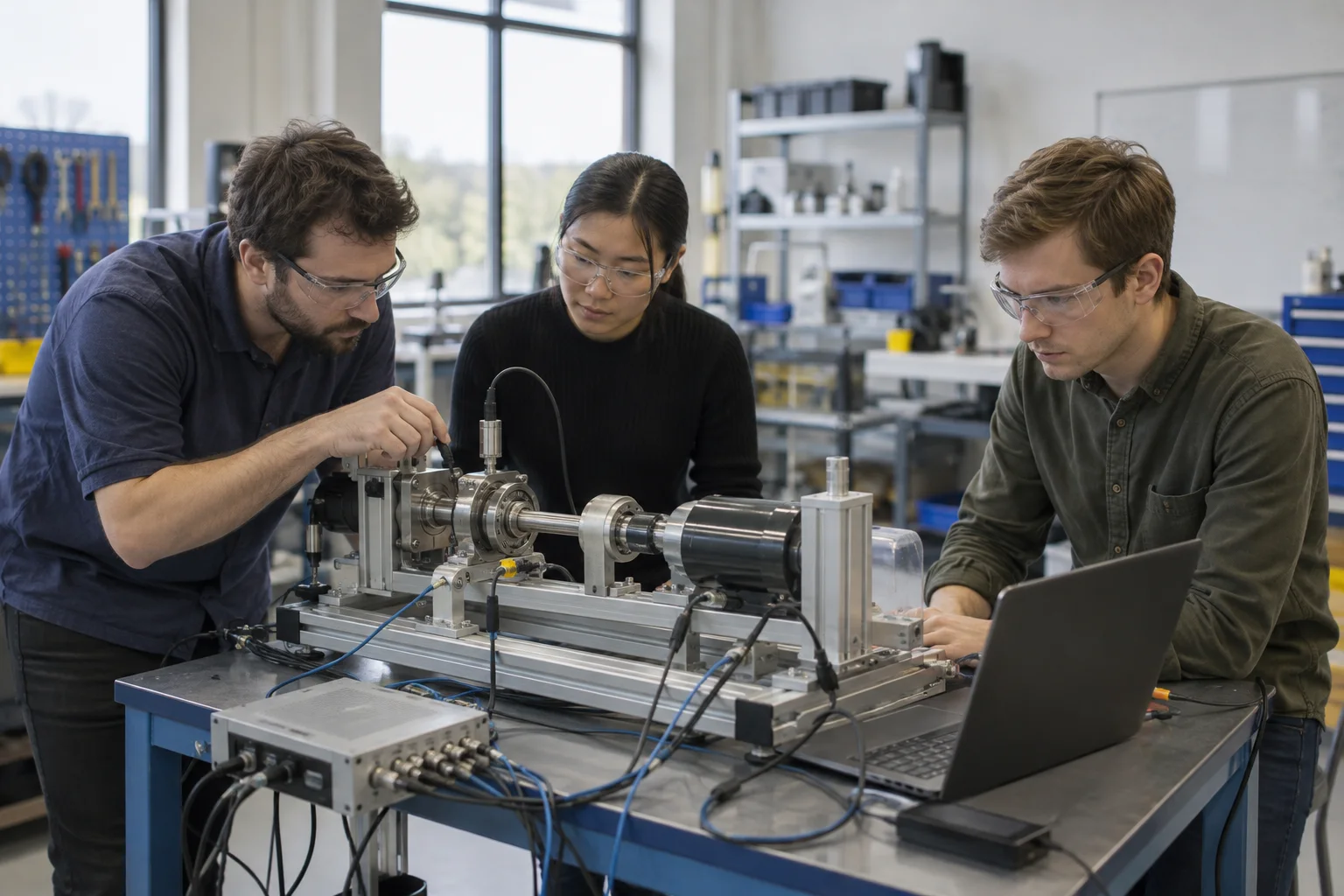
Quantgroup is also exploring how intelligent models may interact with physical environments and local lifestyle contexts. This direction can involve sensor-informed systems, intelligent devices, software-hardware coordination, and contextual data from real operating scenarios. Physical AI presents additional challenges because outputs can affect people, objects, and environments beyond a screen. Reliability, latency, safety boundaries, device constraints, and responsible data collection therefore require particular attention. Our discussion of physical AI represents an active research and exploration direction unless a specific capability is confirmed in a signed engagement.
Evaluation and Responsible Development
We believe technical progress should be evaluated against explicit criteria. Depending on the project, evaluation may consider accuracy, consistency, task completion, false-positive and false-negative costs, response time, user comprehension, operational burden, and security. Results should be interpreted within the conditions under which they were measured. We do not use invented benchmarks or unsupported performance claims to imply maturity. Staged testing, review by relevant stakeholders, documented limitations, and controlled releases can help determine whether a system is ready for broader use.
From Direction to Engagement
Technology work becomes a commercial engagement only after the problem, scope, responsibilities, and delivery terms are documented. A prospective partner can contact us with a business need, technical interest, available context, and intended outcome. We then assess whether our current capabilities are suitable, whether discovery or a proof of concept is appropriate, and what dependencies must be resolved. This process keeps research language separate from contractual commitments and gives both parties a clear basis for deciding whether to proceed.